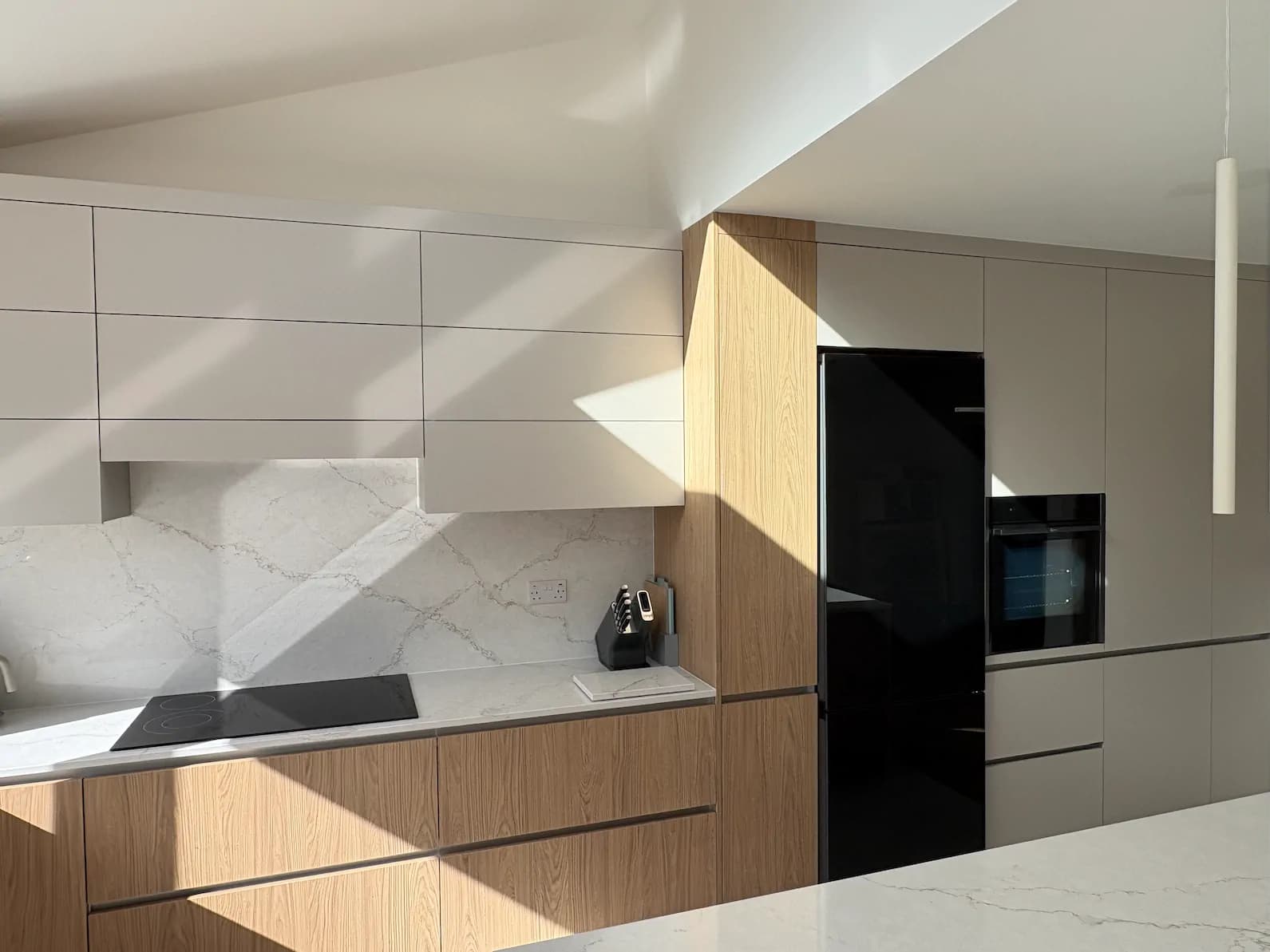
Cabinetry sets the style of a kitchen, but the worktop is what you'll actually touch, chop, spill on, and lean against every single day. At Creo Interiors, choosing the right surface is one of the most important conversations we have with every client, whether the kitchen is a sharp contemporary design or a warm traditional Shaker. Here's how the main materials compare.
1. Quartz: The All-Rounder
Engineered quartz remains our most requested worktop material, and for good reason. It's non-porous, so it resists staining from wine, oil, and coffee without ever needing to be sealed, and it comes in an enormous range of colours and veined finishes that can convincingly mimic natural marble.
It's also remarkably consistent, since the slabs are manufactured rather than quarried, which makes it easy to match across a large island or a run of cabinetry. For busy family kitchens across Kildare and Dublin, quartz offers the best balance of looks, durability, and price.
2. Dekton: Built for Extreme Durability
For clients who want the ultimate in low-maintenance performance, we often recommend Dekton. This ultra-compact surface is heat, scratch, and UV resistant, which makes it ideal not just for worktops but for splashbacks and even outdoor kitchen areas that get direct sunlight.
Its slim profile suits handleless, minimalist cabinetry beautifully, and because it can be fabricated with a waterfall edge, it creates a striking sculptural look on a contemporary island.
3. Granite and Marble: Natural Character
Nothing quite matches the depth and individuality of natural stone. Granite is extremely hard-wearing and, once sealed, copes well with everyday kitchen life, while marble brings unmatched softness and veining that many of our traditional kitchen clients fall in love with.
The trade-off is maintenance: both stones benefit from periodic resealing, and marble in particular can etch if acidic spills like lemon juice or vinegar are left too long. We're always upfront about this with clients so there are no surprises after installation.
4. Solid Wood: Warmth for a Traditional Kitchen
A solid oak or walnut worktop brings a level of warmth that no stone or engineered surface can replicate, and it pairs beautifully with a painted Shaker kitchen or a classic island with turned legs. Wood can be sanded and re-oiled over the years, so minor scratches and marks are never permanent.
It does need more care around heat and standing water than stone or quartz, so we typically recommend it for areas away from the sink and hob, such as a run of dresser units or a breakfast bar.
Getting the Right Advice for Your Project
The best worktop choice always depends on how you actually cook, clean, and live in your kitchen, not just how it looks in a showroom. Kasia and Tomek talk through every option with you in detail, bringing real samples so you can see and feel each material before committing.
Whether you're leaning towards a bold Dekton waterfall island or a traditional oak-topped dresser, our in-house joinery team will fabricate and fit it precisely around your bespoke cabinetry.
Contact Creo Interiors today to book a design consultation at our Celbridge showroom and find the perfect worktop for your new kitchen.